Dear travelers,
If Istria were a person, it would be the friend who somehow has everything figured out.
They know where to find the clearest water, always order the right bottle of wine and disappear into the countryside on weekends to hunt for truffles.
And honestly? We all need a friend like that.
Located in the north of Croatia, close to Slovenia and Italy, Istria is one of those regions that never gives you just one type of holiday. You can spend the morning walking through an ancient Roman amphitheatre, swim in the Adriatic before lunch and end the day surrounded by vineyards and medieval hilltop villages.
There is the coast, often called Blue Istria, with places such as Pula, Rovinj, Poreč and Umag.
Then there is Green Istria, where the sea disappears behind vineyards, olive groves, forests and villages such as Motovun and Buje.
The best way to experience the region?
Don’t choose between the two.
Combine them.
This Istria travel guide brings together our favorite coastal escapes, food experiences, beaches, wineries and towns to help you plan anything from a long weekend to a full road trip.
Why Visit Istria?
Istria feels different from the rest of Croatia.
Its history has been influenced by Roman, Venetian, Austro-Hungarian, Italian and Croatian cultures, and you can see and taste that mixture everywhere.
Expect:
- Ancient Roman landmarks
- Colorful Venetian-style towns
- Beautiful beaches and hidden swimming spots
- Medieval villages on top of green hills
- Local Malvazija and Teran wines
- Olive oil, fresh seafood and homemade pasta
- Black and white truffles
- Boutique hotels, beach clubs and countryside stays
One moment you are drinking an espresso beside a marina. The next, you are eating truffle pasta in a stone village that looks as though it has been waiting several centuries for you to arrive.
Pula: Roman History by the Sea
Pula is the largest city in Istria and one of the best places to begin exploring the region.
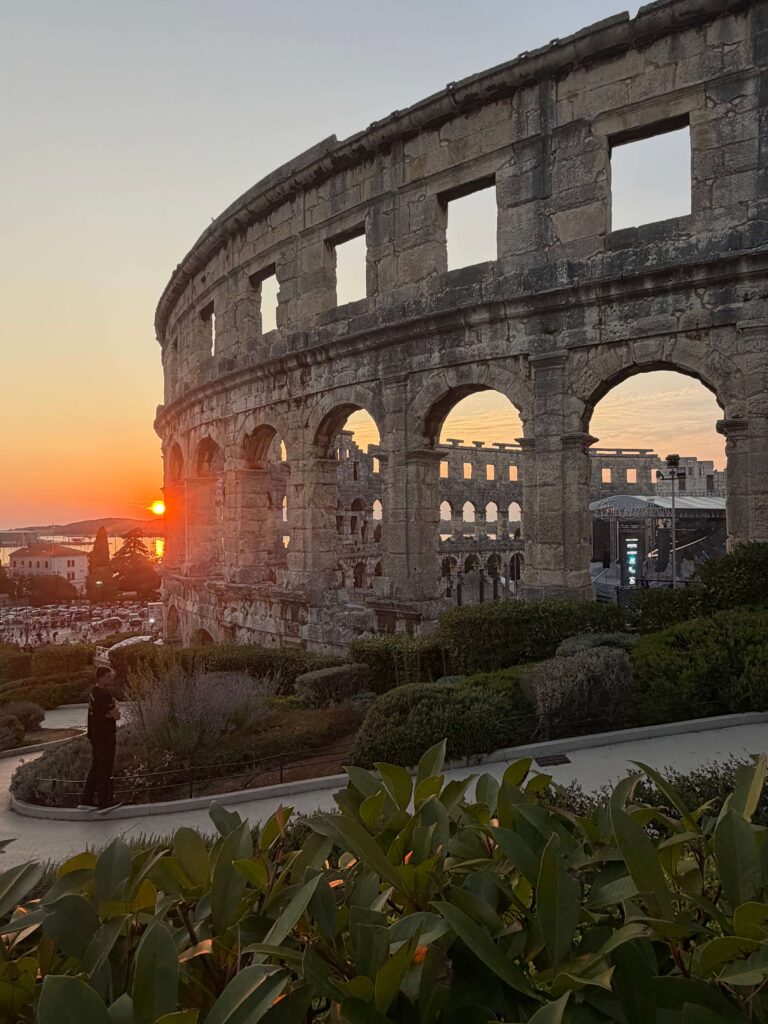
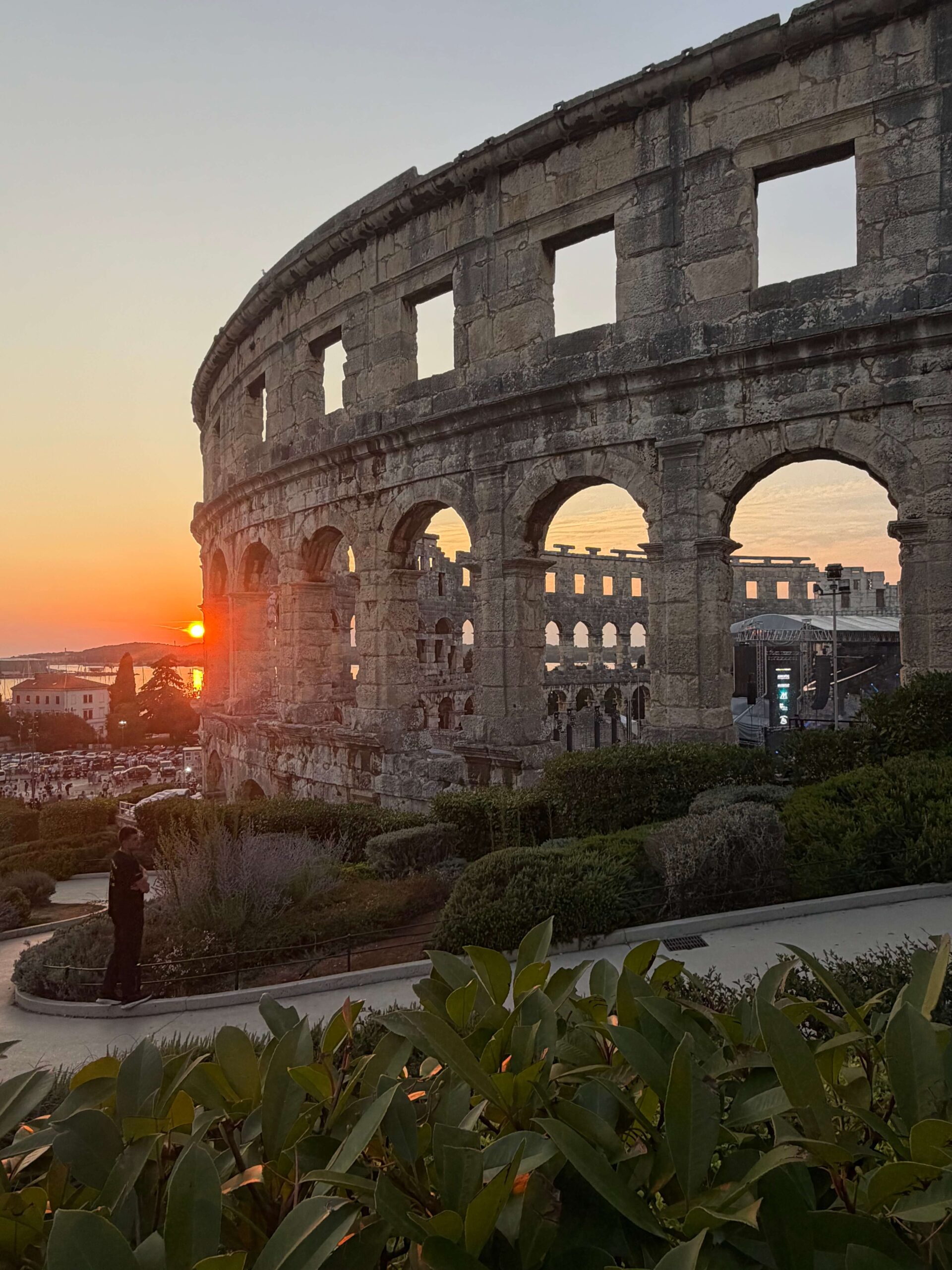
The city’s most famous landmark is the Pula Arena, one of the best-preserved Roman amphitheatres in the world. Its limestone arches have stood near the harbor for almost two thousand years, and the arena is still used for concerts, festivals and film screenings.
Even if you have seen it in photos, the scale is difficult to understand until you stand beside it.
The Arena may be the star, but Pula’s Roman history continues throughout the city. Walk through the historic center and you will also find the Arch of the Sergii, the Roman Forum and the Temple of Augustus.
Pula isn’t only about history, though. The city is surrounded by coves, rocky beaches and clear water, making it easy to combine sightseeing with an afternoon swim.
Take a Day Trip to Brijuni National Park
From Pula, continue to nearby Fažana and take a boat to Brijuni National Park.
The Brijuni archipelago combines nature, wildlife, archaeological remains and a rather fascinating collection of stories. Once a summer residence of Yugoslav president Josip Broz Tito, the islands welcomed political leaders, actors and other famous guests from around the world.
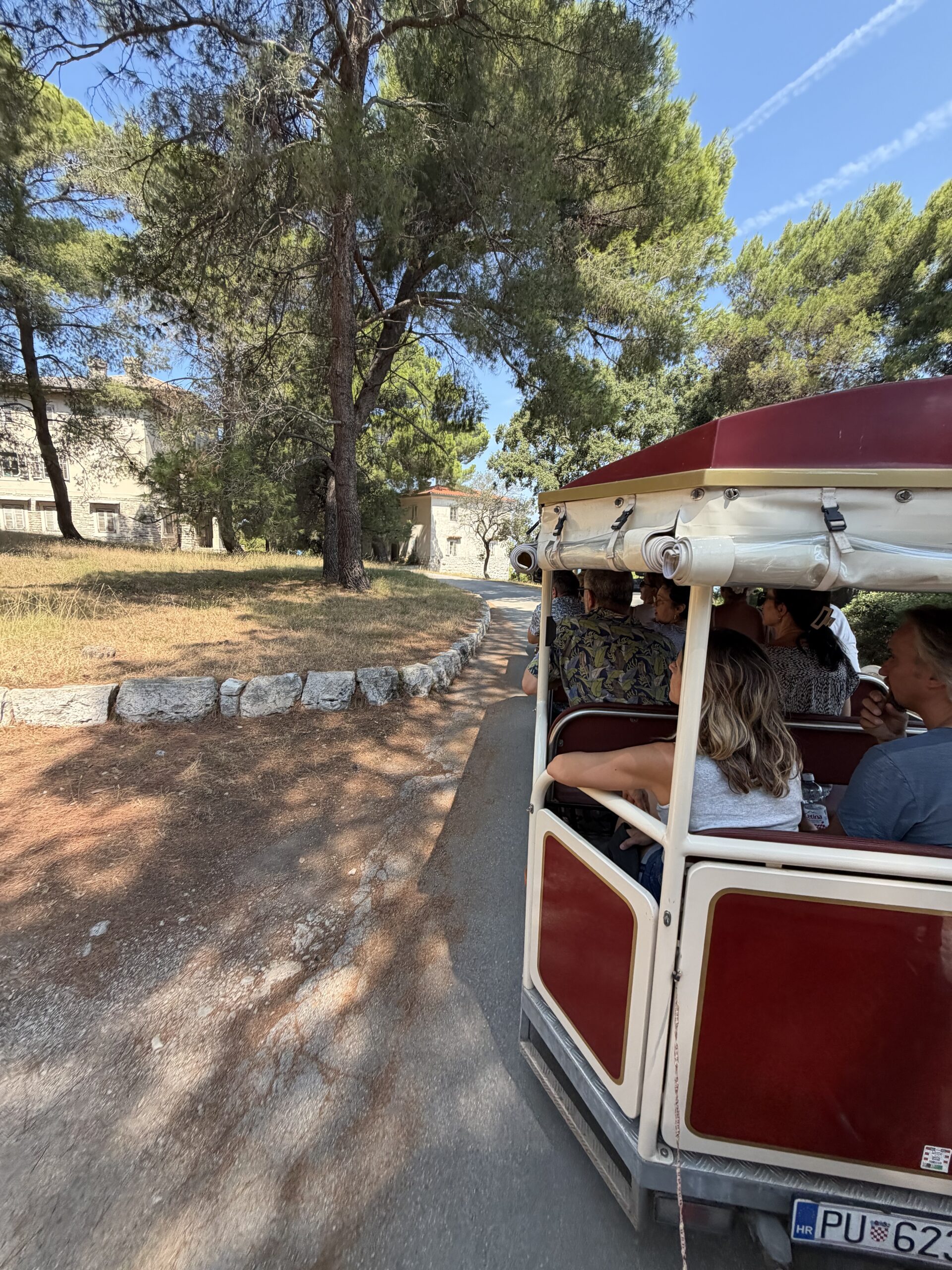
Veliki Brijuni is the main island open to visitors. Depending on the experience you choose, you can explore parts of it by tourist train, bicycle or on foot.
It is an easy day trip from the southern Istrian coast and a wonderful contrast to the busy streets and Roman monuments of Pula.
Want the complete itinerary? Read our full Pula and Brijuni guide here.
Rovinj: Romance, Sunsets and a Luxury Reset
If someone asked me to choose the most beautiful coastal town in Istria, Rovinj would be difficult to beat.
Its old town rises from the Adriatic in a maze of cobbled streets, colorful buildings and small galleries. At the top stands the Church of St. Euphemia, while fishing boats and elegant yachts fill the harbor below.
Summer in Rovinj means busy terraces, boat trips, full restaurants and Aperol glasses clinking beside the marina.
But the off-season reveals another version of the town.
When we visited in March, many restaurants and bars were still closed. The streets were quiet, the terraces were waiting for summer and there was room to walk without navigating through crowds.
Normally, that might sound disappointing.
For a spa weekend, it was perfect.
Grand Park Hotel Rovinj
We stayed at Grand Park Hotel Rovinj, located across the marina from the old town.
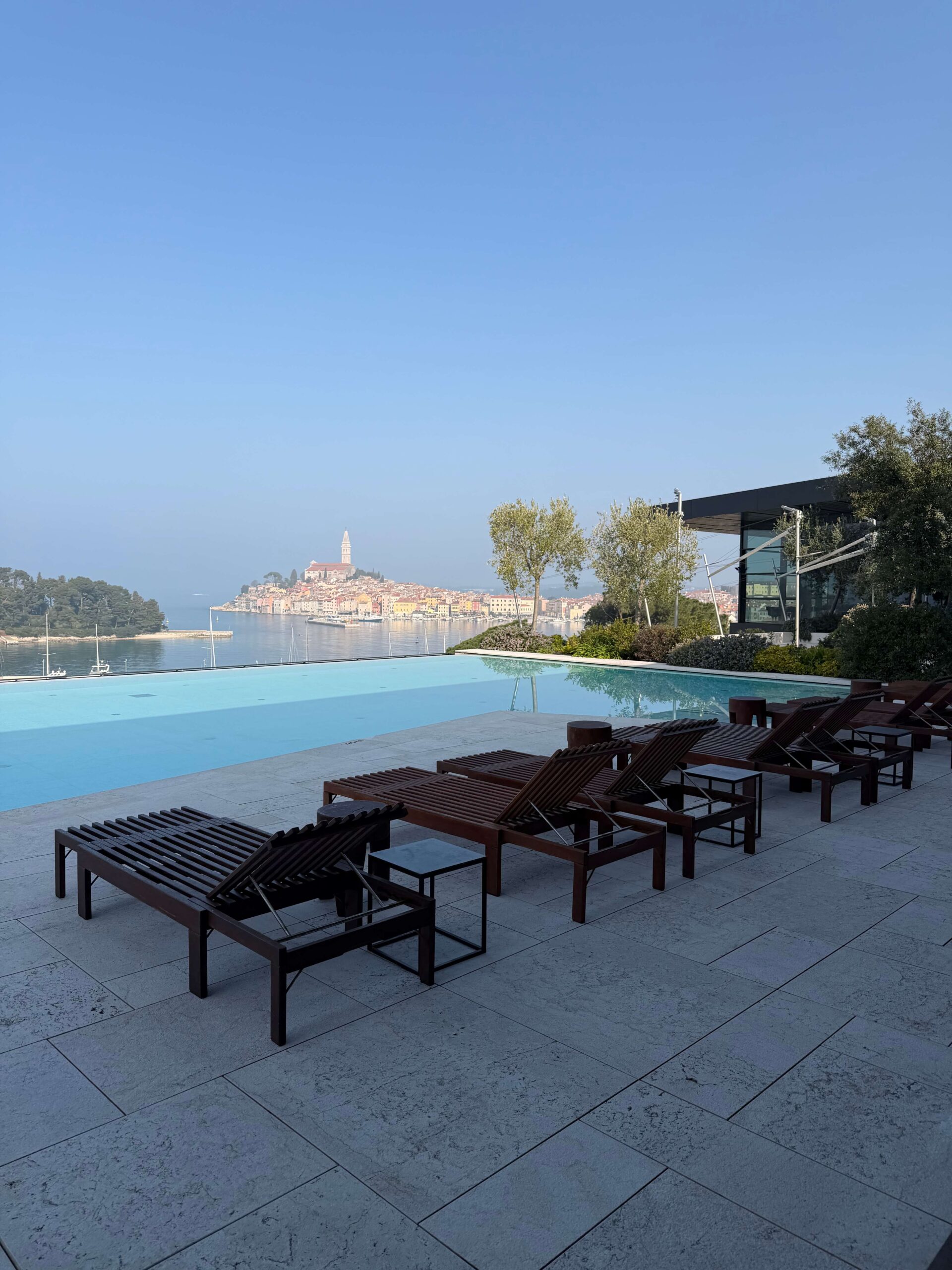
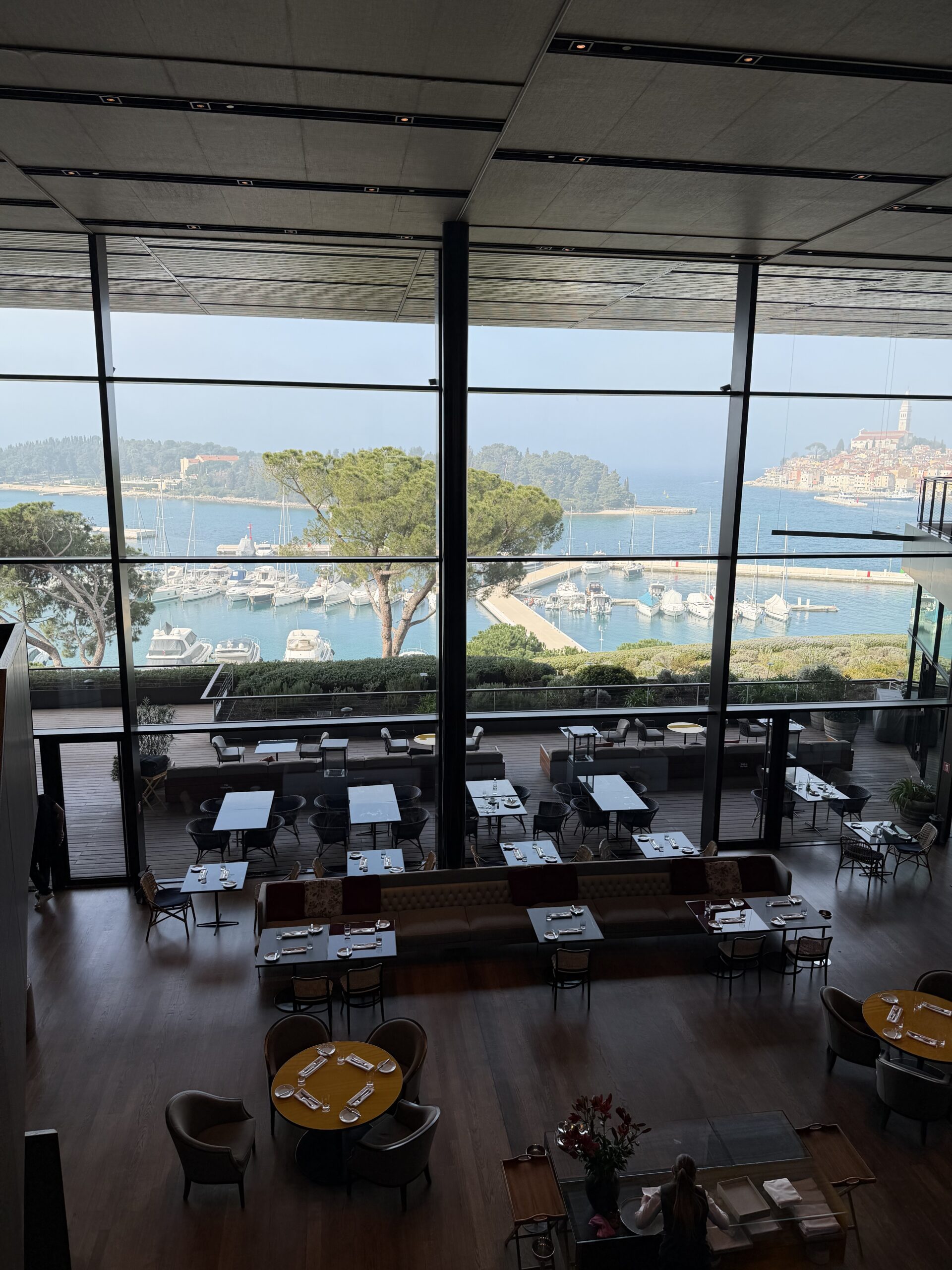
Everything about the hotel feels carefully considered: the sea views, contemporary Mediterranean design, peaceful spa, infinity pools and even the pillow options offered before arrival.
Our room looked directly toward Rovinj’s old town. The bathroom felt like a private spa, and the twice-daily housekeeping added the kind of detail that makes a short trip feel genuinely luxurious.
Then there was breakfast.
Local cheeses, vegetables, pastries and freshly prepared eggs would already have been enough. But there were also oysters and champagne, which is certainly one way to make an ordinary morning feel more exciting.
The hotel spa was the real reason for our visit. With Finnish saunas, steam rooms, indoor and heated outdoor pools, water features and greenery, it was designed for exactly the kind of weekend when you want to wear a bathrobe for an unreasonable amount of time.
Planning a romantic or relaxing escape? Read our complete spa weekend guide to Rovinj and Grand Park Hotel.
Poreč: Beaches, Beach Clubs and Slow Summer Days
Can I confess something?
For years, Poreč was never high on my list of favorite Croatian destinations.
Whenever someone mentioned a summer weekend in Istria, my mind immediately jumped to Rovinj or one of the smaller coastal towns. Poreč always seemed nice, but that was about it.
Then we gave it another chance.
Instead of trying to see everything, we built our weekend around clear water, long lunches, cocktails and beach clubs. That changed the entire experience.
Stay Near Lanterna
We stayed at Hotel Delfin in Lanterna, approximately 15 minutes north of Poreč.
The hotel was simple, with breakfast, a pool, spacious rooms and plenty of parking. More importantly, it placed us close to Lanterna Beach.
Set inside a peaceful bay overlooking Novigrad, this beach completely won me over. It was the kind of place that immediately made us slow down.
Choose Your Poreč Beach-Club Personality
Poreč has several beach clubs, each offering a completely different atmosphere.
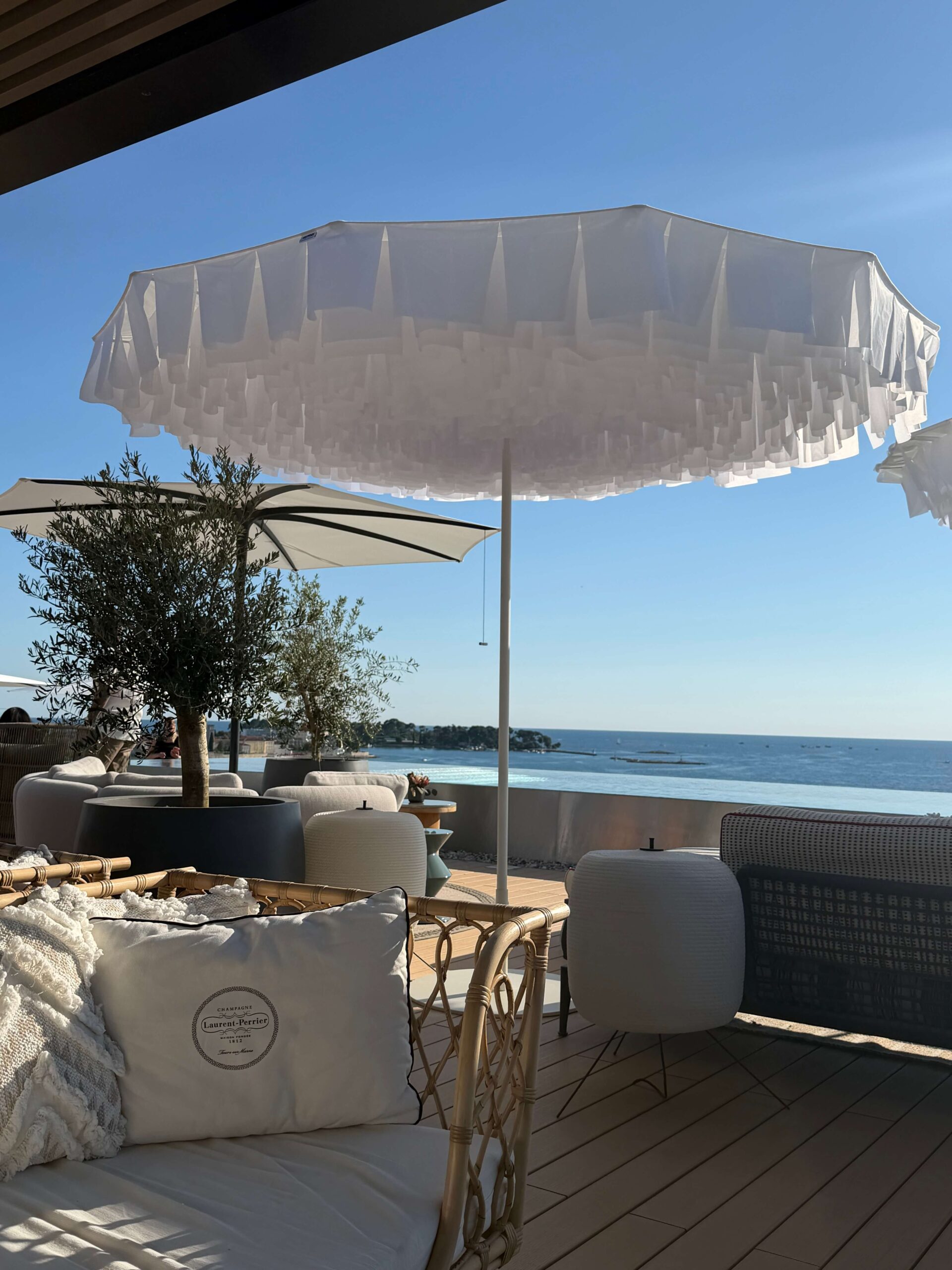
Puro Beach Club feels polished and relaxed, with white sunbeds, a pool, sea views and excellent cocktails. It is somewhere lunch quietly turns into sunset without anyone noticing how many hours have passed.
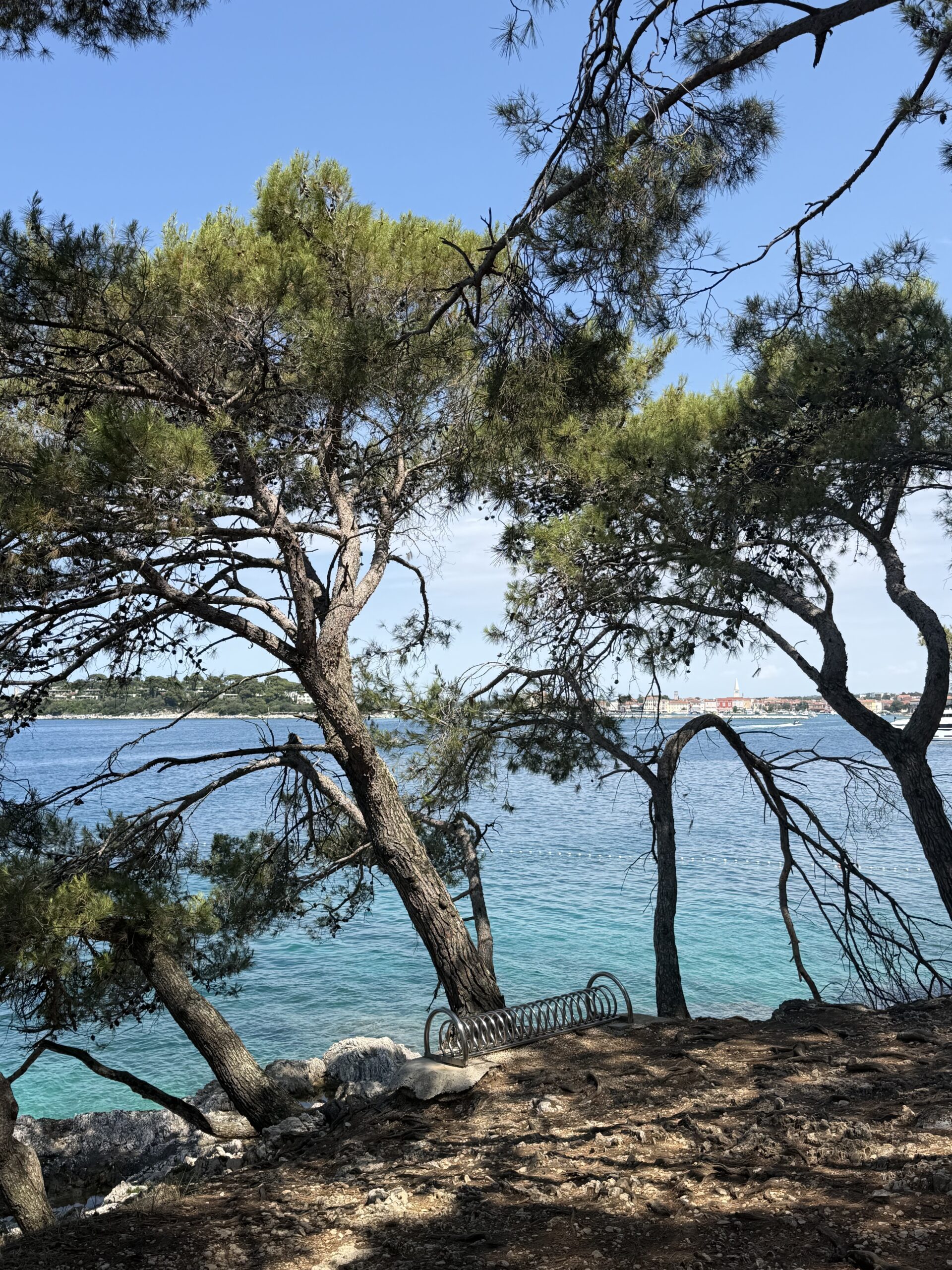
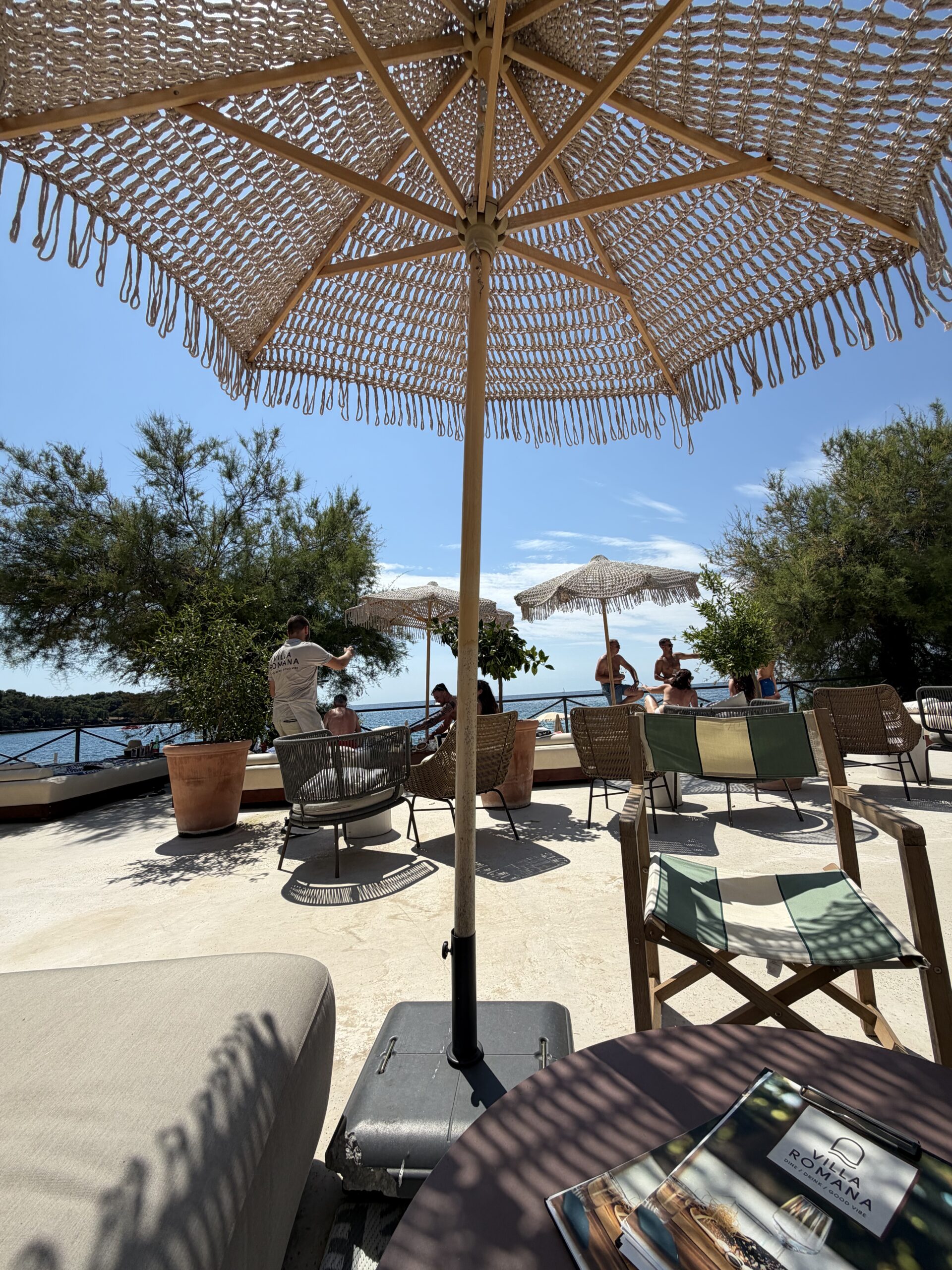
For a more natural beach day, head toward Plava Laguna, where rocky swimming spots sit beneath the pine trees. Nearby, Villa Romana Beach Lounge & Restaurant is ideal for a long lunch overlooking the water.
If your perfect beach day includes DJs, dancers and champagne, D’Or Beach Club is the livelier option.
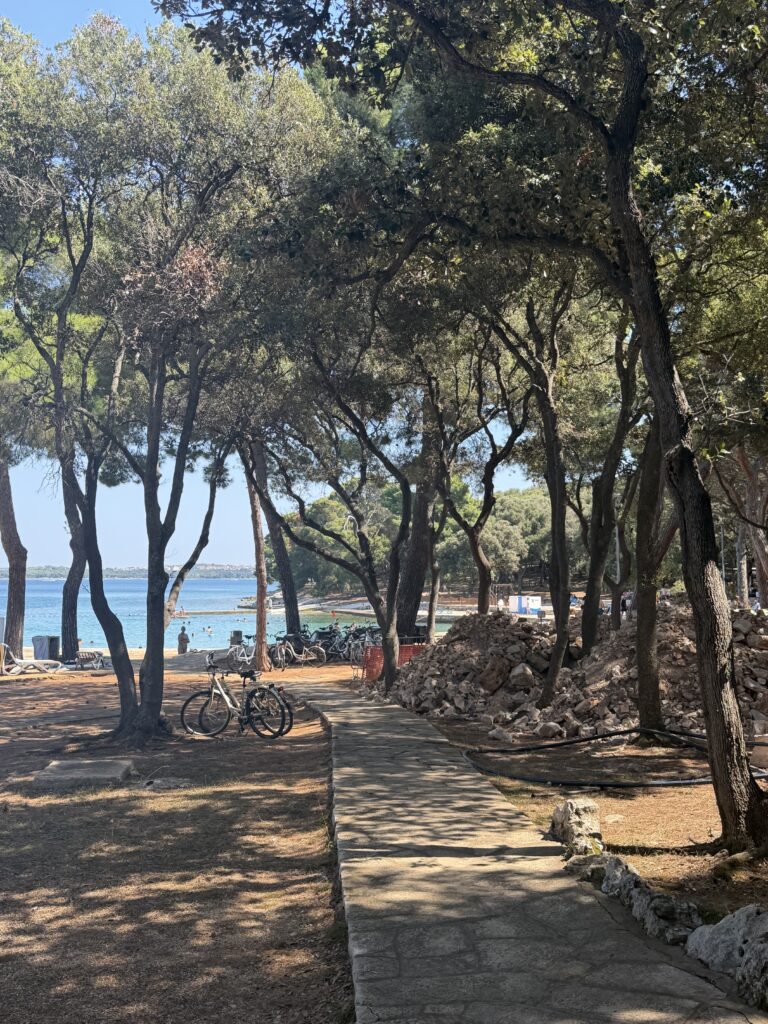
My advice is to combine both sides of Poreč: one stylish beach-club day and one simple afternoon with a towel, water shoes and a quiet place beneath the trees.
Find the beaches, beach clubs and practical details in our complete weekend guide to Poreč.
Umag: An Easygoing Introduction to Istria
Sitting close to the Slovenian border, Umag is often one of the first Croatian coastal towns travelers reach when driving into Istria from Ljubljana or Trieste.
That makes it ideal for a first stop or a final slow day before heading home.
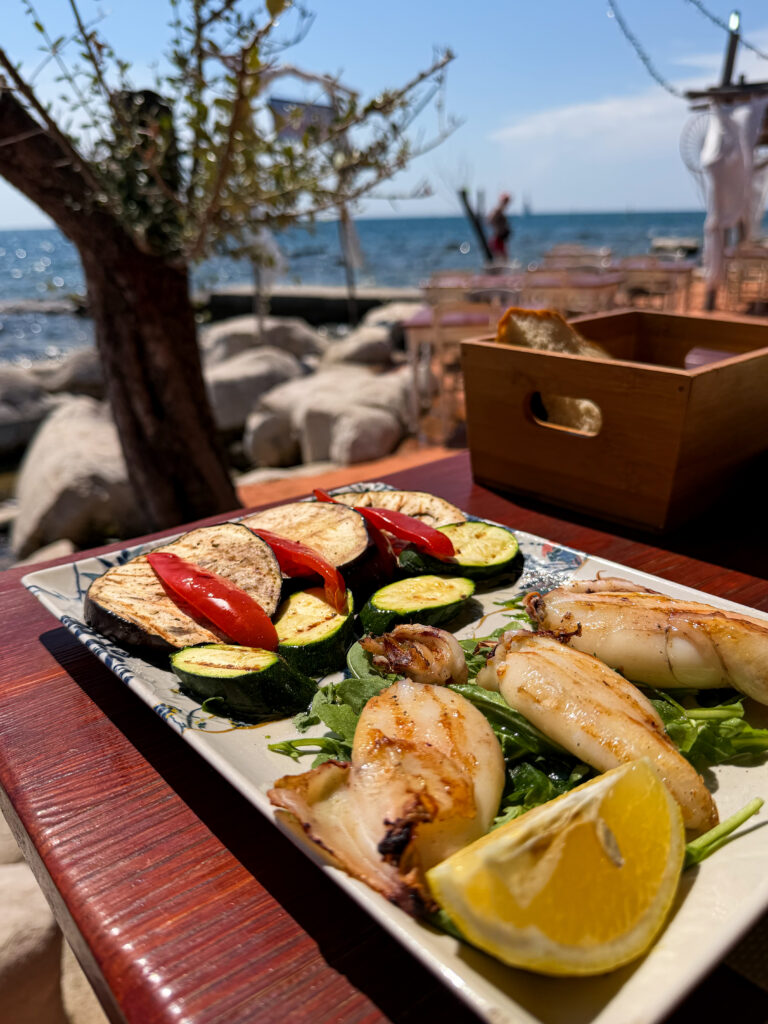
Umag is smaller and more relaxed than Rovinj or Poreč. Its old town occupies a small peninsula, with stone streets, cafés and waterfront views that are easy to explore without a strict itinerary.
Walk through the historic center, stop around Trg Slobode and continue along the promenade. The town’s manageable size means you can enjoy the old streets, lunch beside the sea and an afternoon swim without spending the day rushing between attractions.
Umag is also known internationally for tennis, but you do not need to visit during a tournament to enjoy it. The surrounding coastline offers beaches, cycling routes, resorts and quiet bays.
For the best experience, use Umag as a relaxed base for northern Istria. From here, you can easily combine the coast with a drive inland toward Buje, Momjan or Grožnjan.
Green Istria: Truffles, Wine and Motovun Magic
The coast may appear on most postcards, but inland Istria is where some of the region’s most memorable experiences happen.
This is the land of truffles, wine, olive oil and medieval towns.
We explored it on a day trip from Ljubljana, beginning with a truffle hunt in Livade.
Go Truffle Hunting in Livade
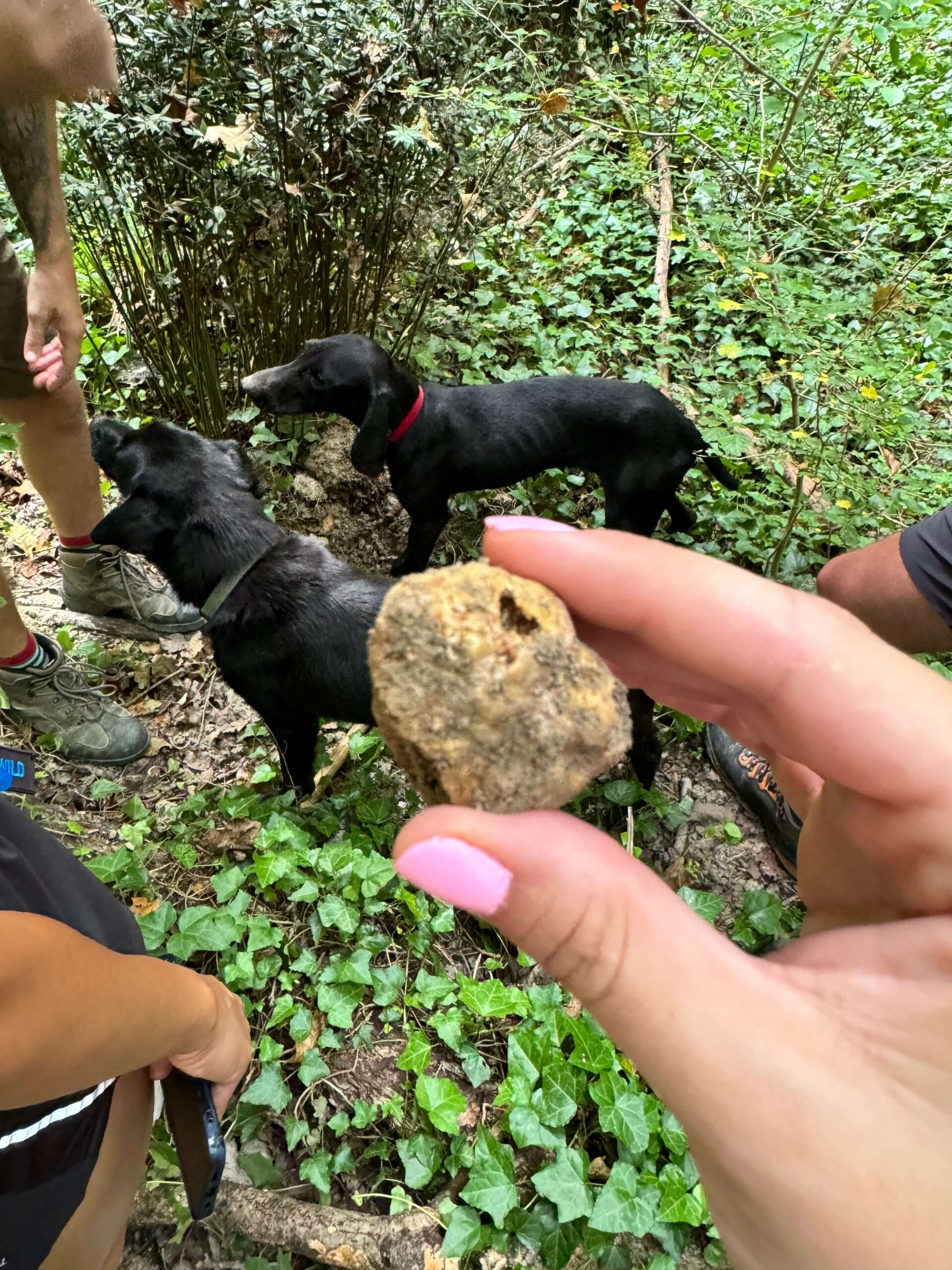
Truffles grow underground near the roots of certain trees, which means specially trained dogs are used to find them.
Our guide Nikola had left his former career as a civil engineer for a life in the forest, and his knowledge made the hunt feel like a lesson, a nature walk and a treasure hunt combined.
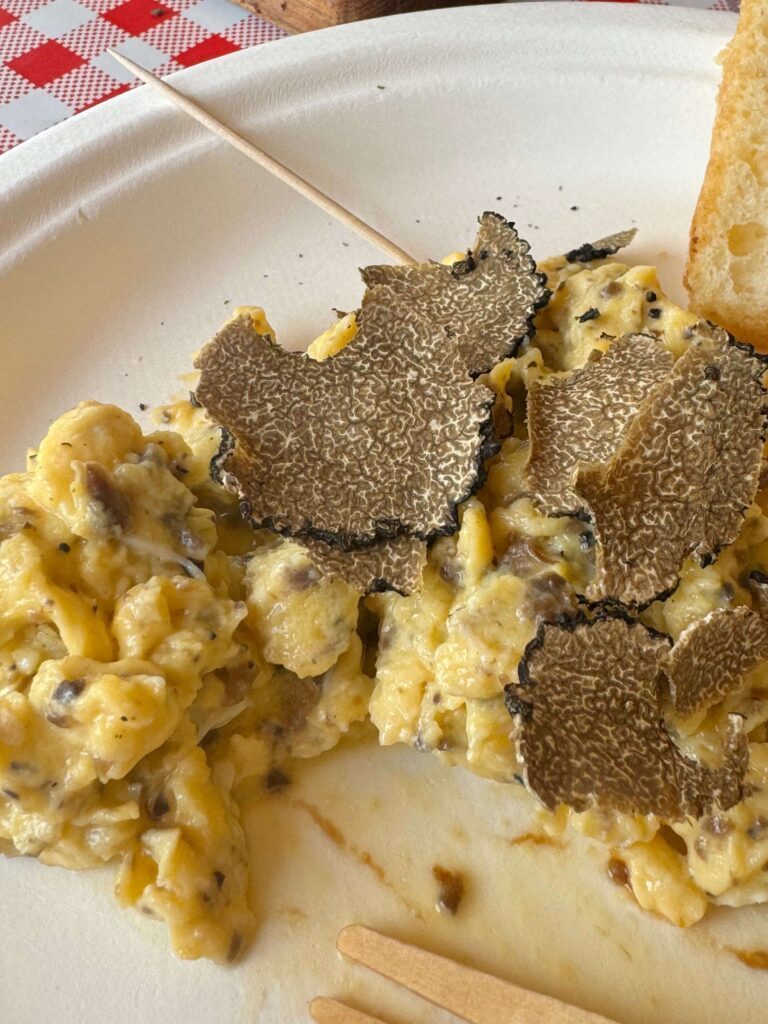
Afterward, we tasted truffle cheeses, meats, spreads, olive oils and an omelet with truffles—which was my favorite.
If you are visiting in autumn, Istria’s famous white-truffle season makes the experience especially interesting. Black truffles are also found in the region during other parts of the year, so always check what is in season when booking.
Wine Tasting Near Motovun
From Livade, we continued to Tomaz Winery.
I had first discovered the winery’s sparkling rosé at a food festival and immediately knew I wanted to visit the vineyard.
The setting did not disappoint.
During the tasting, you can try a selection of wines accompanied by local cheeses or cured meats, with views toward Motovun in the distance.
It is exactly how wine should be tasted: slowly, surrounded by the landscape where it was produced.
Explore Motovun
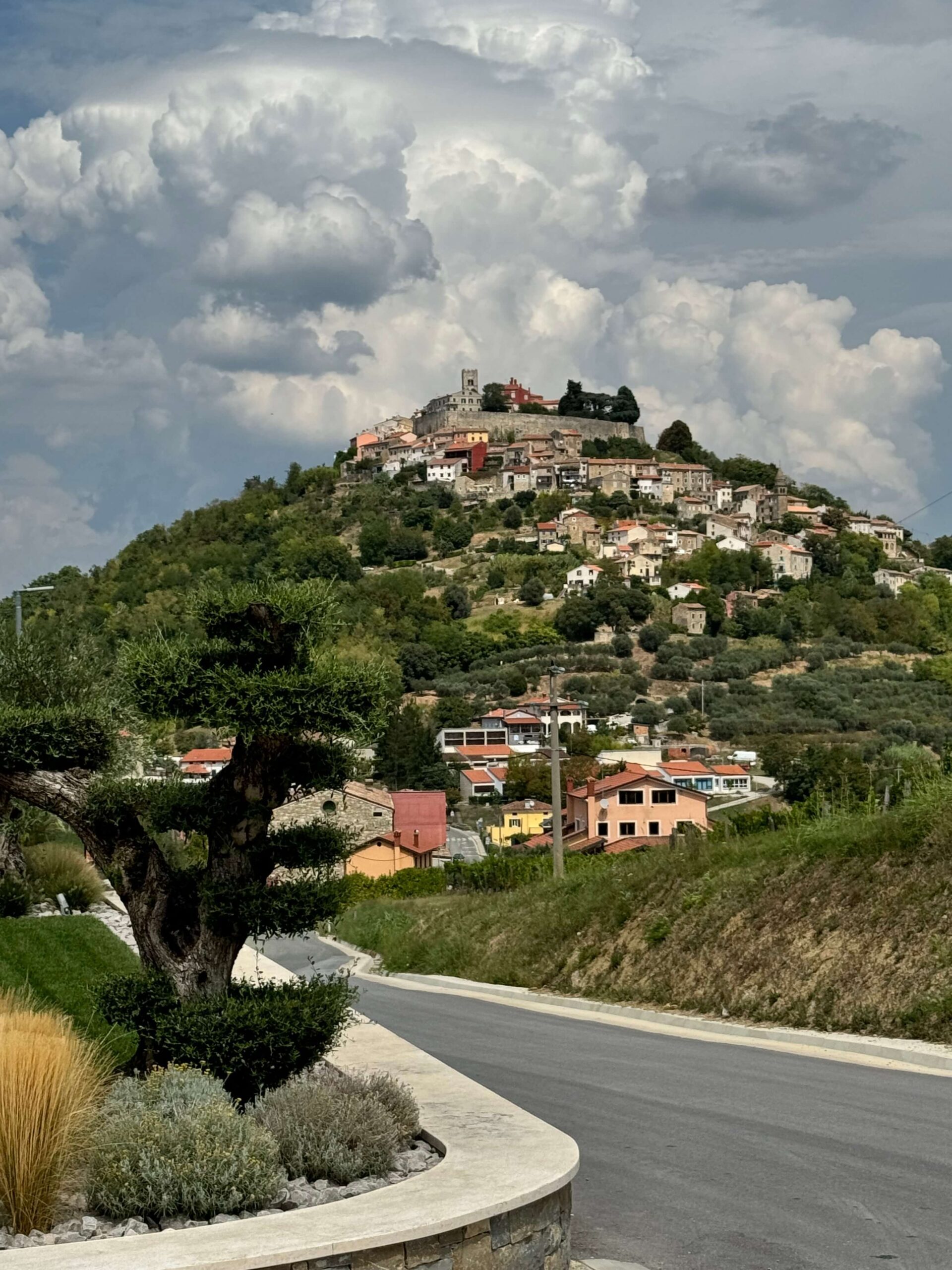
Motovun is one of Istria’s most recognizable hilltop towns.
Surrounded by vineyards and forest, the medieval town looks dramatic from the road below and even better once you reach its stone streets.
Walk through the old town, take in the views and leave time for lunch. Konoba Mondo is one of the best-known dining stops, especially for travelers interested in truffle dishes.
We also managed to find what may have been the most expensive ice cream of my life: €14 at Montona Gallery.
Was it worth it? Every penny.
Finish With a Tasting in Buzet
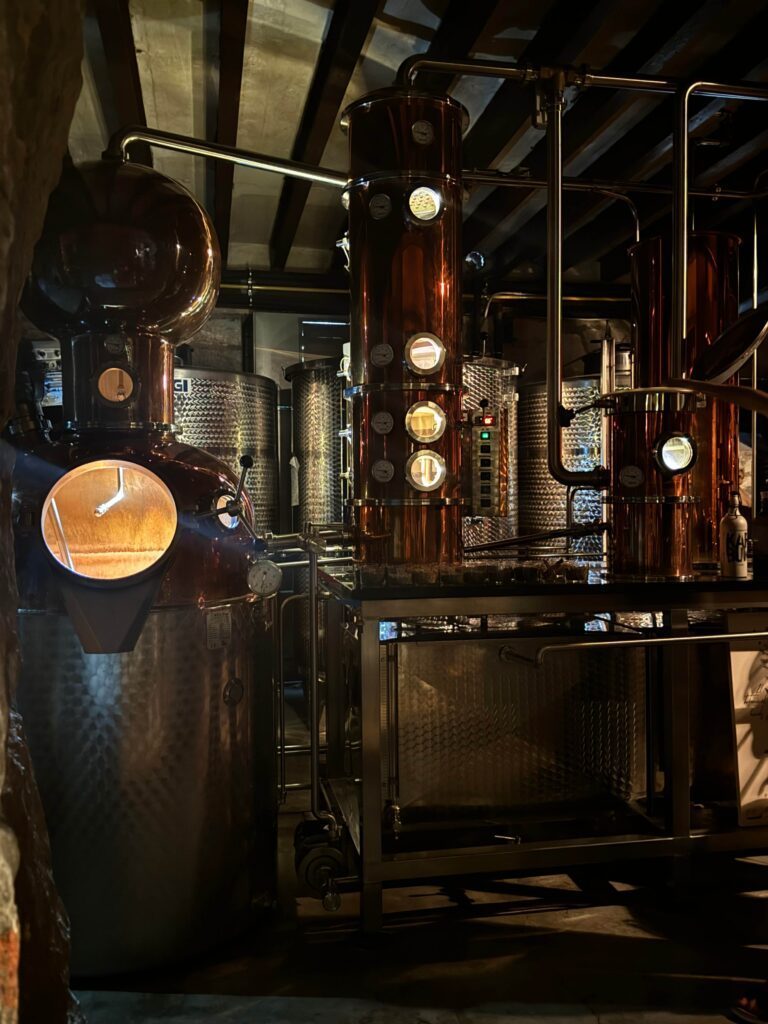
Our final stop was Aura Distillery in Buzet, known for artisanal brandies and liqueurs made with local ingredients.
I already loved their Teranino, but this visit also introduced me to Biska, a traditional mistletoe liqueur, and Karbun gin.
The gin is produced with a mixture of herbs and spices and filtered through activated charcoal. Every bottle even comes with charcoal pieces that can be added to the glass with ice and orange.
It was an unusual and very Istrian way to finish the day.
Want to follow the complete route? Read our truffle hunt, wine tasting and Motovun day-trip guide.
How Many Days Do You Need in Istria?
You can enjoy Istria over a long weekend, but five to seven days will give you a much better balance between sightseeing and slowing down.
A Three-Day Istria Itinerary
Day one: Pula and Brijuni
Explore the Pula Arena and the historic center before taking a boat trip toward Brijuni National Park.
Day two: Rovinj and Poreč
Spend the morning walking through Rovinj, then continue to Poreč for a beach afternoon, dinner or sunset cocktails.
Day three: Green Istria
Go truffle hunting in Livade, taste wine near Motovun, explore the hilltop town and finish with a stop in Buzet.
A Five-Day Istria Itinerary
Day one: Umag and the northern coast
Day two: Buje, Momjan and Grožnjan
Day three: Poreč and its beaches
Day four: Rovinj and a spa or slow old-town day
Day five: Pula and Brijuni National Park
If food and wine are your priorities, add another inland day for Motovun, Livade and Buzet.
The Best Time to Visit Istria
There is no single perfect season because each part of the year offers a different experience.
Spring
Spring is ideal for road trips, cycling, sightseeing and quieter coastal towns. Temperatures are comfortable, although some seasonal restaurants and beach clubs may not yet be open.
Summer
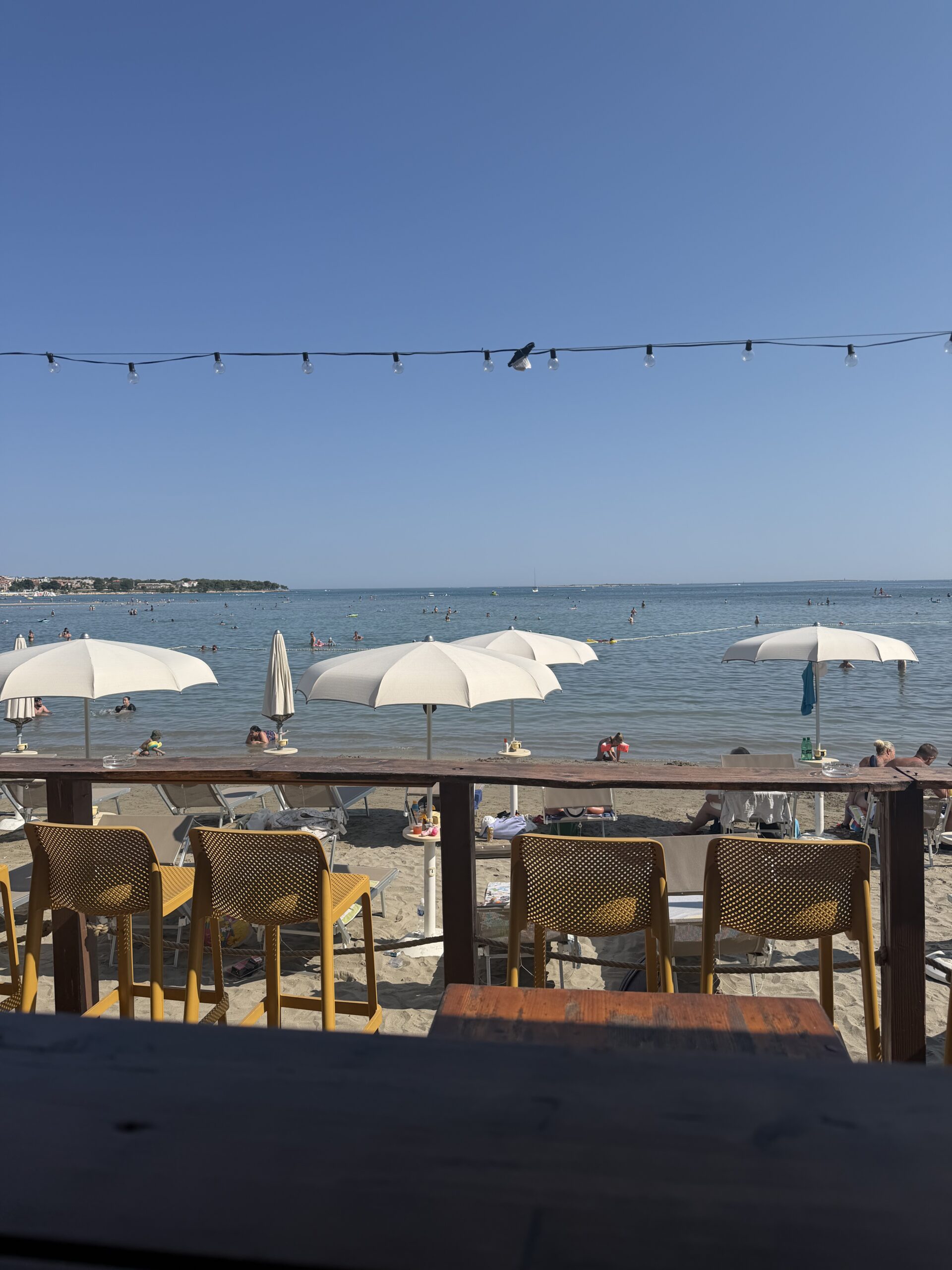
Summer is best for swimming, boat trips and beach clubs. It is also the busiest and most expensive season, so reserve hotels, restaurants and sunbeds early.
Autumn
Autumn is one of the best times for food and wine. The vineyards are active, the countryside changes color and white-truffle season brings special menus and events to inland Istria.
Winter
Winter is quiet and atmospheric. It works particularly well for spa weekends, slow food experiences and peaceful walks, but expect many seasonal coastal businesses to be closed.
Practical Tips for Your Istria Road Trip
Travel by car
A car gives you the freedom to combine the coast with wineries, villages and countryside experiences. Public transport is much more limiting once you leave the major towns.
Don’t stay in only one place
If you have several days, consider dividing your stay between the coast and inland Istria. You will spend less time driving and experience two completely different sides of the region.
Reserve tastings in advance
Many wineries, truffle experiences and small producers require advance booking.
Bring water shoes
Istria’s water is beautiful, but many beaches are rocky or pebbled. Water shoes make entering the sea far more graceful and far less painful.
Check seasonal opening hours
Beach clubs, restaurants, boat excursions and attractions may operate on reduced schedules outside summer.
Leave room for spontaneous stops
Some of the best moments in Istria happen when you notice a winery sign, a roadside olive-oil shop or a small village you had not planned to visit.
Is Istria Worth Visiting?
Absolutely.
What makes Istria special is not one beach, one town or one famous landmark.
It is the contrast.
Roman ruins and modern beach clubs.
Fishing harbors and luxury hotels.
Salt air and green forests.
Fresh seafood by the coast and truffle pasta in the hills.
You can plan an active road trip, a romantic weekend, a luxury spa escape or several days focused entirely on food and wine.
Or you can mix everything together which, in my opinion, is the best way to experience it.
Start with the sea.
Follow the road into the hills.
And make sure there is always time for one more glass of Malvazija.
Truly yours,
The Creation of Us
P.S.: Some of the links are affiliate links, meaning if you click through and make a purchase, I will earn a small commission at no additional cost to you. Thanks for your support!