
Dear travelers,
Planning your first trip to London? London is one of those cities where there’s something interesting around every corner. From Big Ben and Buckingham Palace to colourful streets, world-famous museums, food markets and historic pubs, there’s so much to explore that planning your first visit can feel a little overwhelming.
And while London is relatively easy to navigate, there are a few things worth knowing before you arrive.
Where should you stay? Which airport is the most convenient? Do you need an Oyster card? Which attractions should you book in advance? And how much planning is actually necessary?
After our trip to London, we put together this practical guide with the things we found most useful, along with a few tips we wish we’d known earlier.
Whether you’re visiting for a weekend or spending several days exploring, here’s everything you need to know before your first London trip.
Where to Stay in London for First-Time Visitors
One of the first things to consider when planning your trip is where to stay.
London is enormous, and choosing the right neighbourhood can make a big difference to how much time you spend travelling between attractions.
The good news? You don’t necessarily need to stay right next to Big Ben or Buckingham Palace. As long as your accommodation is close to a well-connected Underground station, getting around is relatively straightforward.
Here are some of the best areas to consider.
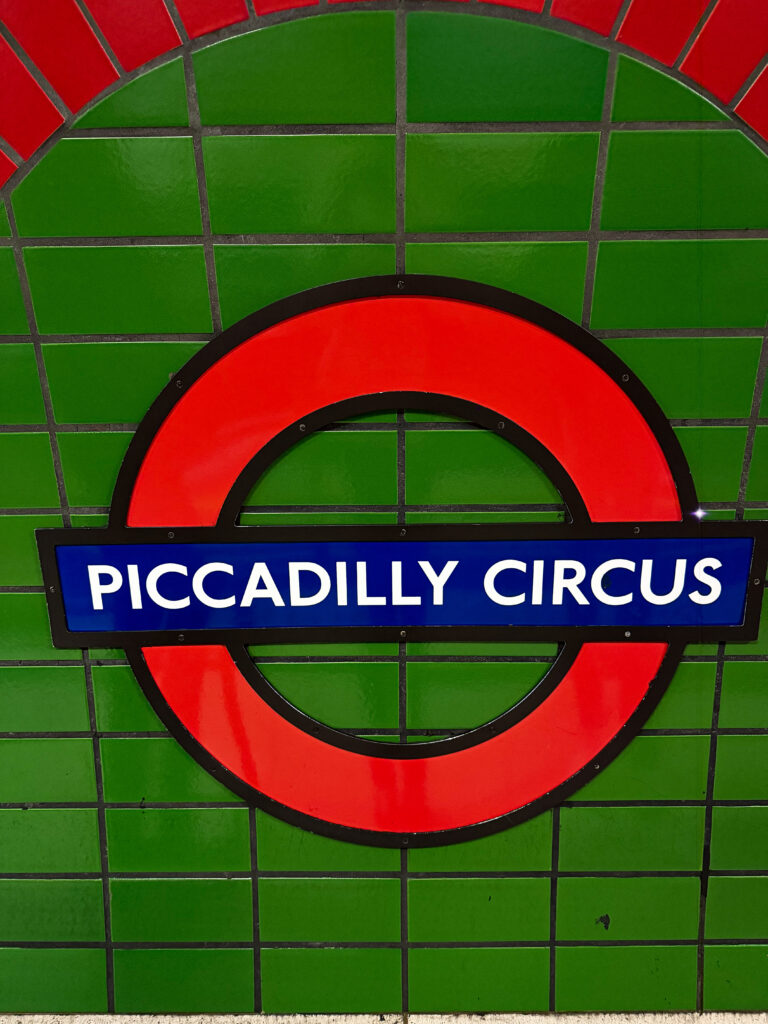
Covent Garden – Best for Being in the Centre of Everything
If you want to be surrounded by restaurants, shops, theatres and some of London’s most famous attractions, Covent Garden is a great choice.
You can easily walk to Leicester Square, Trafalgar Square, Soho, Chinatown and the West End. There’s always something happening, whether it’s street performers, busy restaurants or people heading to evening shows.
Why stay here?
Excellent central location.
Plenty of restaurants, cafés and bars.
Walking distance to many attractions.
Perfect for theatre lovers.
The downside: Accommodation can be expensive, and the area gets very busy, especially during evenings and weekends.
Westminster & Victoria – Best for Sightseeing
If your priority is visiting London’s most iconic landmarks, Westminster and Victoria are worth considering.
You’ll be close to Buckingham Palace, Westminster Abbey, Big Ben and St James’s Park.
Victoria is also a major transport hub, making it convenient for travelling around London and reaching certain airports.
Why stay here?
Close to famous landmarks.
Excellent transport connections.
Convenient for a short sightseeing trip.
Good selection of hotels around Victoria.
The downside: Some parts of Westminster are quieter in the evenings, and accommodation near the main attractions can be expensive.
South Kensington – Best for Museums and Beautiful Streets
South Kensington is one of London’s most elegant neighbourhoods, with beautiful buildings, museums and plenty of cafés.
The Natural History Museum, Victoria and Albert Museum and Science Museum are all located here. Hyde Park and Kensington Gardens are also nearby.
It’s a lovely area if you want to stay somewhere a little calmer without being too far from central London.
Why stay here?
Close to several famous museums.
Beautiful architecture.
Good Underground connections.
Plenty of cafés and restaurants.
The downside: Hotels can be expensive, and you’ll need public transport to reach attractions further east.
Paddington – Best for Transport Connections
Paddington is a practical choice, particularly if you’re arriving at Heathrow Airport.
The area has plenty of hotels, restaurants and transport connections, and Hyde Park is within walking distance.
Why stay here?
Excellent train and Underground connections.
Convenient for Heathrow Airport.
Wide selection of accommodation.
Close to Hyde Park and Little Venice.
The downside: Some streets around the station feel less atmospheric than areas such as Covent Garden or Kensington.
Where We Stayed in London
During our trip, we stayed at K Hotel Kensington.
Kensington was a convenient base for exploring London, especially because of its public transport connections.
We could easily reach the main attractions while also enjoying the beautiful streets and museums around Kensington.
My biggest advice when booking accommodation? Check how far the hotel is from the nearest Underground station.
A hotel might look close to central London on a map, but if you need to walk 20 minutes just to reach a station every morning, it can quickly become inconvenient.
How to Get Around London
One of the best things about London is that you really don’t need a car.
The city has an extensive public transport network, and most attractions are easily accessible by Underground, bus or train.
However, there are a few things worth understanding before your first journey.
The London Underground: Your Best Friend
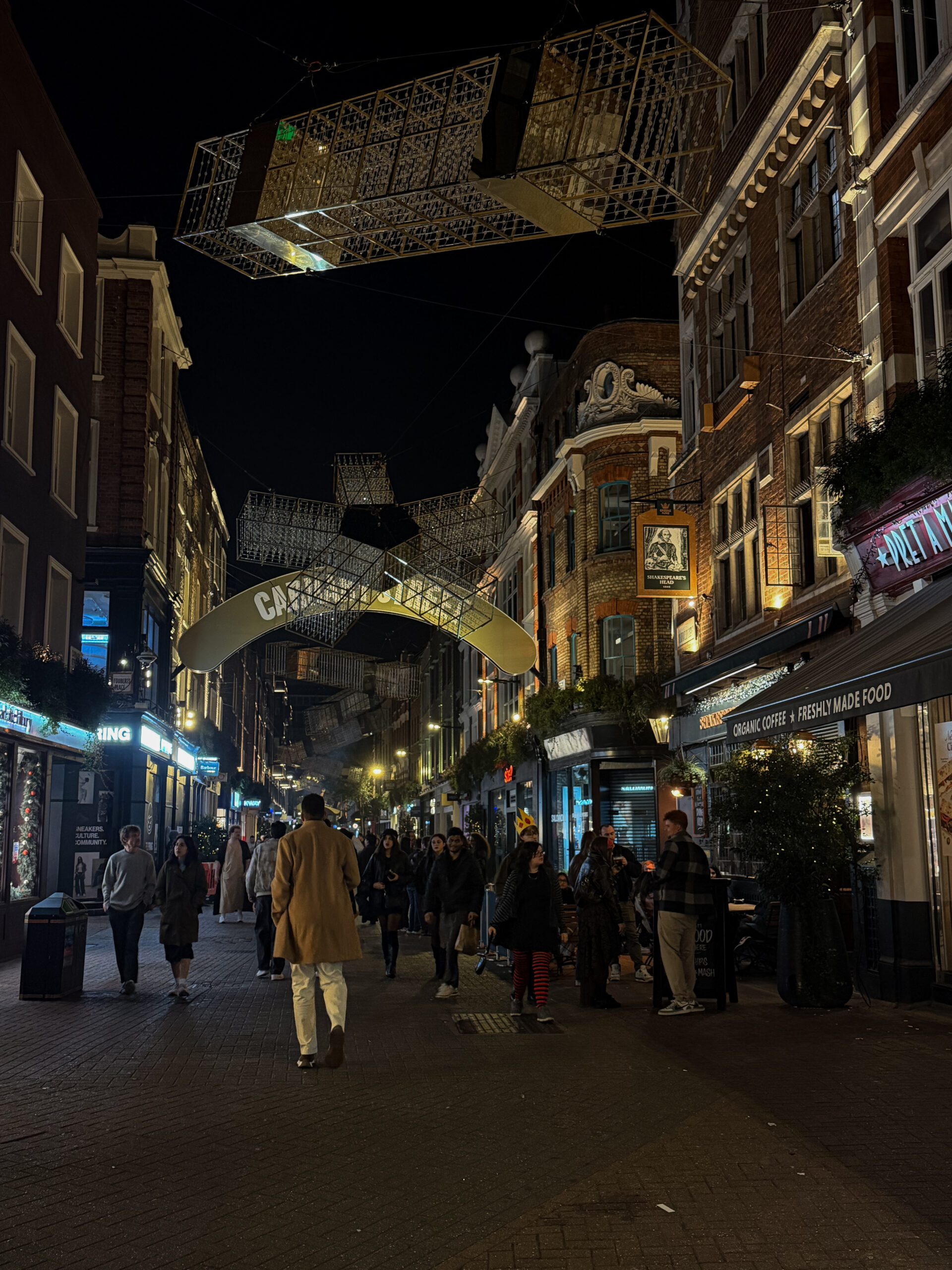
The London Underground, also known as the Tube, is usually the fastest way to travel between different parts of the city.
The lines are colour-coded, and Google Maps or Citymapper can help you find the easiest route.
A few things to remember:
Trains can get crowded during rush hour.
Some stations have multiple exits, so check which one you need.
Not all stations have lifts or step-free access.
Sometimes walking is faster than taking the Tube for one stop.
One of the easiest ways to explore London is to group attractions by neighbourhood.
For example, Big Ben, Westminster Abbey, St James’s Park and Buckingham Palace can all be visited on foot without needing public transport between every stop.
Do You Need an Oyster Card in London?
This is something many first-time visitors wonder about. The answer is no, not necessarily.
You can use a compatible contactless bank card, Apple Pay or Google Pay on most London public transport.
Simply tap your card or device on the yellow reader when entering and leaving the Underground.
If you’re taking a bus, you only need to tap when boarding.
An Oyster card is another option, particularly if your bank card doesn’t support contactless payments or you’d prefer a separate travel card.
Important tip: Always use the same card or device when tapping in and out.
Even if your phone and physical bank card are connected to the same account, the system may treat them as separate payment methods.
How Much Does Public Transport Cost in London?
London uses a fare-capping system for eligible pay-as-you-go journeys.
This means that once you’ve reached the applicable daily cap for the zones you’ve travelled through, additional qualifying journeys won’t cost you more that day.
The exact amount depends on the zones and services you use.
Most major tourist attractions are located in Zones 1 and 2, although airports and some other destinations are further away.
You can check the latest fares on the official Transport for London website.
Money-saving tip: You don’t need to buy a daily travel ticket automatically. Contactless payment with fare capping is often a convenient option for visitors.
Don’t Forget London’s Red Double-Decker Buses
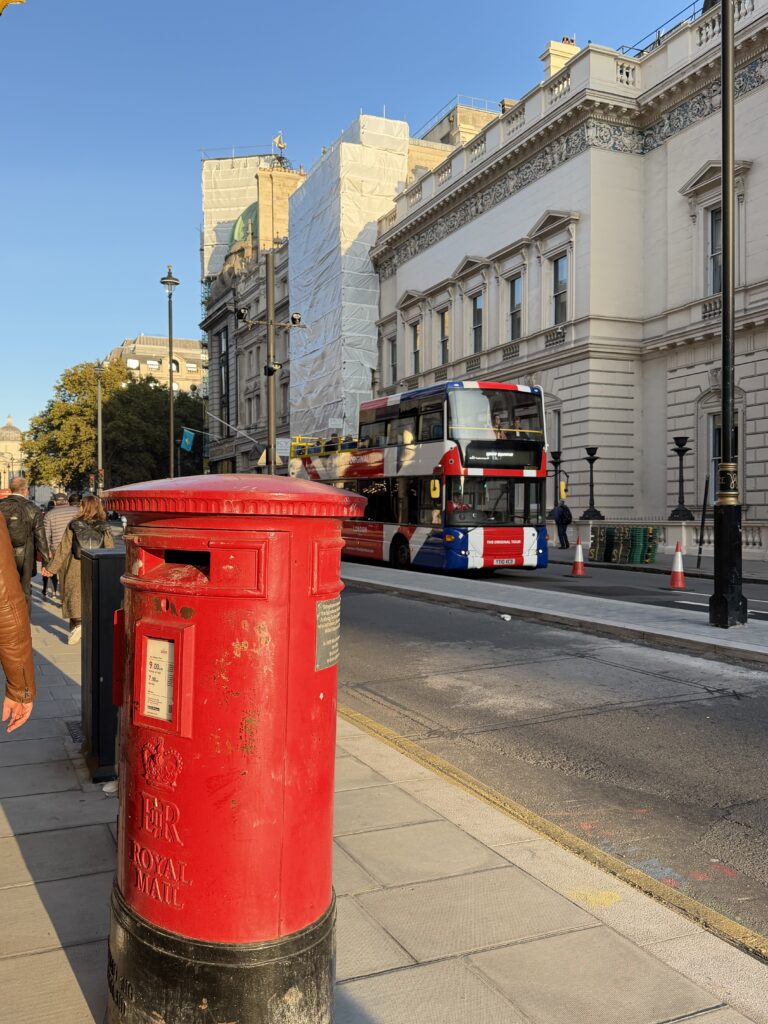
London’s red double-decker buses aren’t just iconic; they’re also a useful way to get around.
And unlike the Underground, you actually get to see the city while travelling.
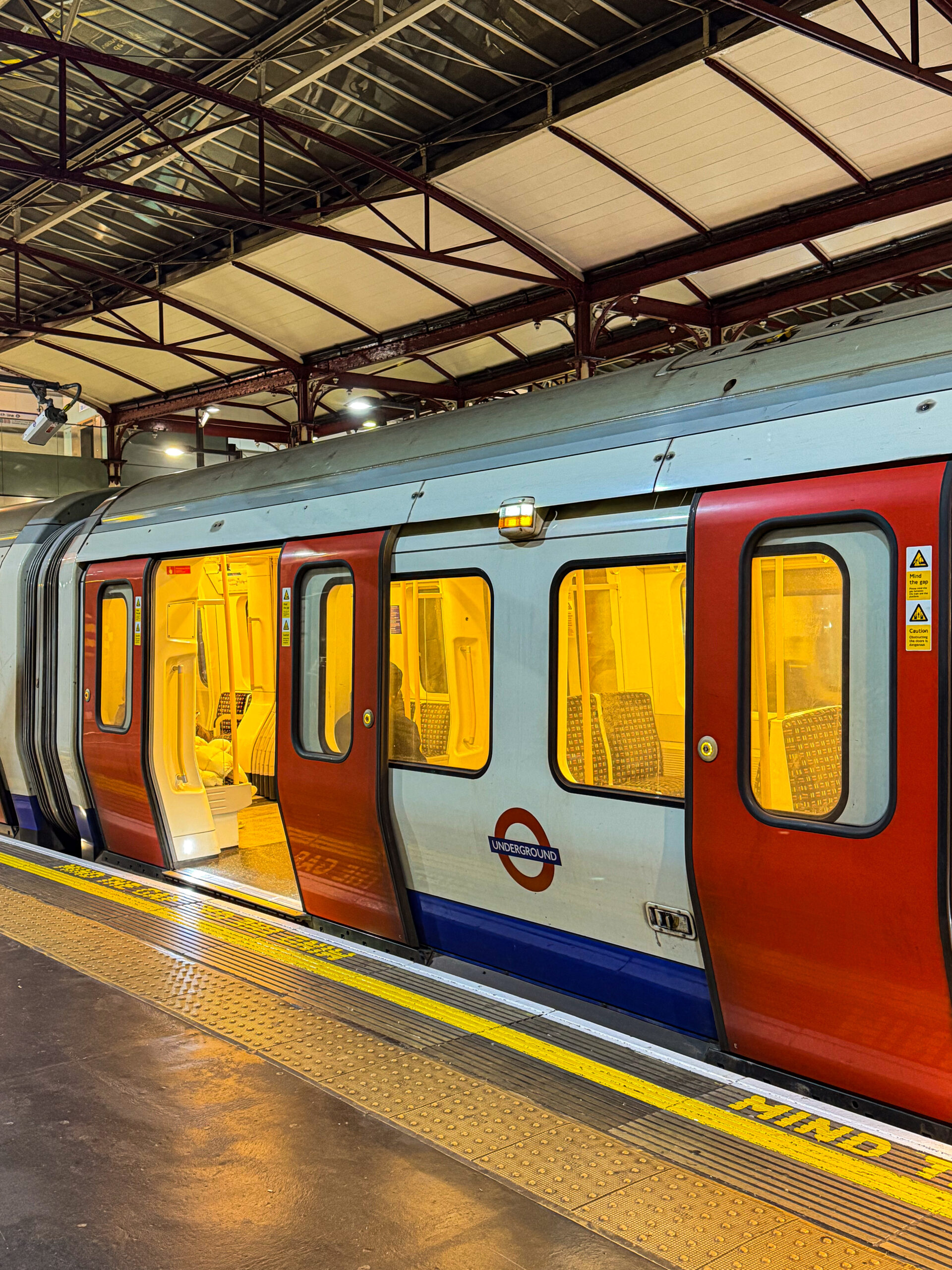
If you have time, try sitting upstairs at the front of a double-decker bus. It’s a fun way to enjoy the streets of London without booking a sightseeing bus tour.
Buses can be slower during busy periods, but they’re particularly useful for shorter journeys.
London Is Very Walkable, But Distances Add Up
Some of our favourite moments in London were simply walking through different neighbourhoods.
You notice so much more when you’re on foot, from historic buildings and beautiful streets to small cafés and unexpected places.
But don’t underestimate London’s size.
Trying to walk between attractions on opposite sides of the city can quickly become exhausting.
Our recommendation: Explore one neighbourhood on foot, then use public transport to reach the next.
Getting From London’s Airports to the City Centre
Something important to know before booking your flight: London has several airports, and not all of them are close to the city centre.
A cheap flight can become less attractive once you add the cost and time of getting into London.
Here are the main airports and your transport options.
Heathrow Airport (LHR)
Heathrow is London’s largest airport and one of the easiest to reach by public transport.
You have several options:
Piccadilly line: A budget-friendly Underground connection to central London.
Elizabeth line: Convenient for Paddington, Tottenham Court Road, Farringdon and other stations.
Heathrow Express: A fast train service to Paddington.
Depending on the route, getting into central London can take approximately 15–60 minutes.
Gatwick Airport (LGW)
Gatwick is located south of London and has good train connections.
The main options include:
Gatwick Express to London Victoria.
Southern trains to Victoria and other stations.
Thameslink trains to London Bridge, Blackfriars, Farringdon and St Pancras.
Journey times to central London are generally around 30–60 minutes, depending on the service and destination.
Tip: Don’t automatically book the Gatwick Express. Regular trains may be cheaper and just as convenient depending on where you’re staying. And of course, my Snow Monkey bottle came along for the trip! It’s become one of my travel essentials, whether I’m waiting at the airport, catching a train or spending the day exploring a new city.
Luton Airport (LTN)
Luton is another popular airport for low-cost flights.
However, there’s one important thing to know: the airport terminal doesn’t have a mainline train station.
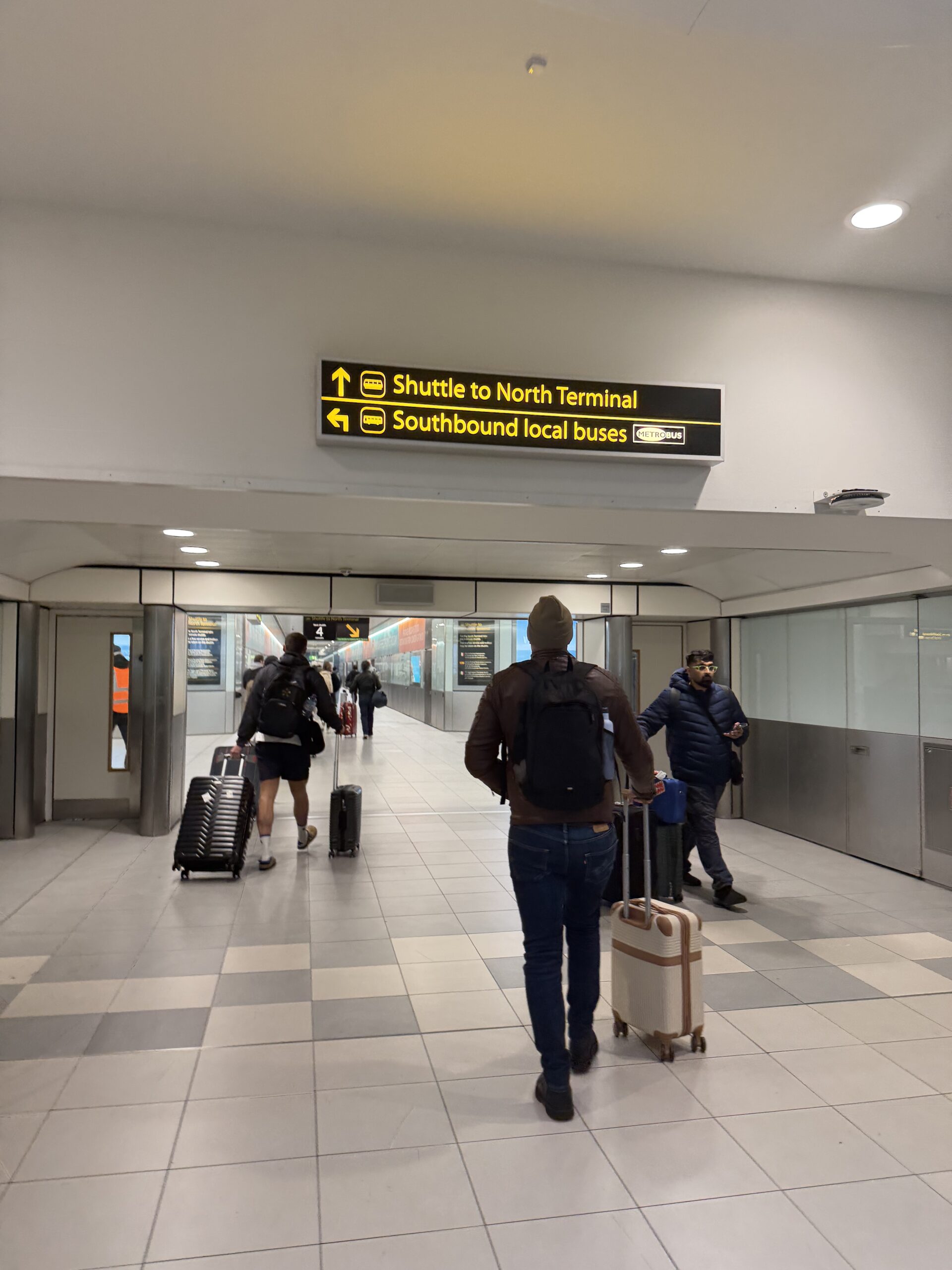
To reach central London by train, you’ll first need to take the Luton DART, an automated shuttle connecting the terminal with Luton Airport Parkway station.
The DART journey takes around four minutes.
From Luton Airport Parkway, trains connect to stations such as St Pancras International, Farringdon and London Bridge.
Depending on your destination, allow roughly 40–60 minutes or more for the full journey.
Important tip: When booking your train ticket, choose Luton Airport rather than Luton Airport Parkway if you want a through ticket that includes the DART transfer.
You can also take an airport coach, which may be cheaper depending on the time and route.
London City Airport (LCY)
London City Airport is much closer to central London than the other major airports.
It’s connected to the Docklands Light Railway (DLR), making it convenient for reaching eastern and central London.
Depending on your destination, the journey can take approximately 20–40 minutes.
The downside is that it has fewer flight options than London’s larger airports.

What to Book in Advance in London
London is full of things you can see for free, but some popular attractions are worth booking before your trip.
This is especially important during weekends, holidays and busy travel periods.
Westminster Abbey
Westminster Abbey is one of London’s most famous historic buildings and has been the setting for royal coronations for centuries.
Inside, you’ll find royal tombs, beautiful architecture and the burial places or memorials of important historical figures.
Allow approximately 1.5–2 hours for your visit.
Booking ahead is recommended, and it’s important to check opening hours because the Abbey is still an active church.
Tower of London
The Tower of London is another attraction worth booking ahead.
It’s home to the Crown Jewels and has a fascinating history involving royalty, imprisonment and executions.
If you’re interested in British history, this is definitely somewhere to spend a few hours.
Allow at least 2–3 hours to explore.
West End Musicals
London is famous for its West End theatre scene.
If there’s a particular musical or play you want to see, booking in advance is usually the safest option.
However, if you’re flexible about the show and seating, you may find discounted last-minute tickets.
Popular Viewpoints
Some of London’s best viewpoints include:
Sky Garden.
Horizon 22.
The View from The Shard.
Sky Garden and Horizon 22 offer free viewing opportunities, but advance reservations are often needed.
Sunset slots are particularly popular, so check availability before your trip.
Museums and Exhibitions
One of the best things about London is that many major museums offer free general admission.
Some of the most popular include:
Natural History Museum.
Victoria and Albert Museum.
British Museum.
National Gallery.
Tate Modern.
However, temporary exhibitions may require paid tickets, and timed reservations may be recommended.
Our tip: Don’t try to visit every museum in one day. Choose the ones that interest you most and give yourself enough time to enjoy them.
Do You Need a Visa or UK ETA to Visit London?
Before travelling, make sure you check the UK’s entry requirements.
The United Kingdom is no longer part of the European Union and is not in the Schengen Area.
Depending on your nationality and immigration status, you may need a visa or a UK Electronic Travel Authorisation (ETA).
An ETA is a digital travel permission required for many visa-exempt visitors.
A few things to remember:
Most visitors need a valid passport.
Check whether you need an ETA or visa before travelling.
Apply through the official UK government website.
Make sure your travel permission is linked to the correct passport.
Having an EU residence permit doesn’t automatically mean you can enter the UK without additional permission.
Final Tips for Your First London Trip
London is an incredible city, but it’s also one where a little preparation can save you a lot of time.
Choose accommodation close to public transport, check which airport you’re flying into, book your must-see attractions and don’t underestimate how much walking you’ll do.
But most importantly, don’t try to squeeze absolutely everything into one trip.
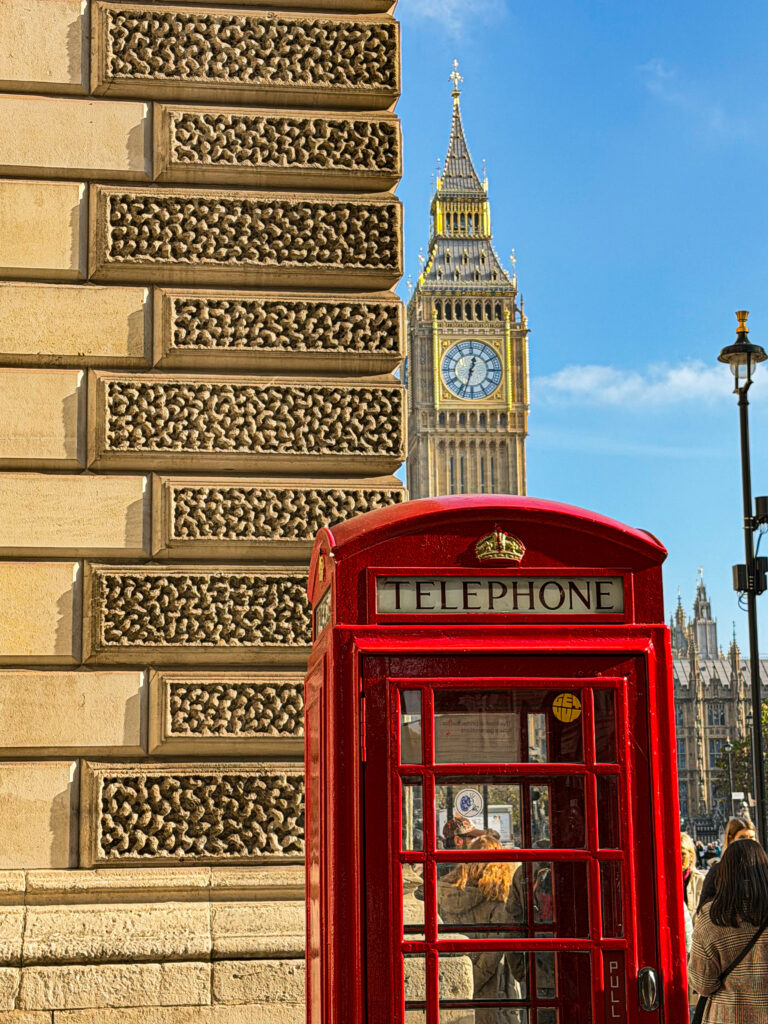
Yes, Big Ben, Buckingham Palace and Tower Bridge are worth seeing. But London is also about wandering through Notting Hill, exploring food markets, visiting museums and discovering beautiful streets you didn’t even know existed.
And those unplanned moments can be just as memorable as the famous attractions.
Planning your first visit? Check out our 3 Days in London Itinerary for a day-by-day guide to the city’s most famous landmarks, neighbourhoods and food spots.
Truly yours,
The Creation of Us
P.S.: Some of the links are affiliate links, meaning if you click through and make a purchase, I will earn a small commission at no additional cost to you. Thanks for your support!